

Elephant foot Yam called as Kanda Gadda ( Gadda translates to Tuber) in Telugu has its own place in culture and traditions. In certain Andhra families, a bride leaves her parents’ house with an elephant foot yam tied in her saree pallu. She would then plant the same in her now new home, her in-law’s place for prosperity and good luck. It seems Kanda Gadda propagates wide and far and keeps giving new plants offshoots. It is a symbolic way to bless that the love and prosperity of the newly weds to grow and sustain like a Yam plant.
However my thoughts when I heard about this ritual was that, root / tuber vegetables grow and survive in harsh conditions even with little or no care. Especially Yam. These can also be stored for months together and come handy in seasons where we will not have access to fresh vegetables. These are power packed with nutrients and makes up for nutrition deficiency in the days when one wouldn’t have access to abundant food or vegetables. So this was a hidden treasure a bride would take with her to her new home.
So this Kanda Bachhali is also a traditional item on wedding menus in Andhra. My first tryst with this curry was post my wedding. The day after I got married, we had a lunch get-together at my in-laws’ house, where my parents and few close relatives were invited. Kanda Bachhali was on the menu. I loved this veggie which I didn’t recognise and checked with my mother in law, who also told me about the importance of Yam in wedding ritual. Later I learnt this recipe from her.
Before we jump to learn how to make this one, a small warning to newbies while handling the Yam. Some of the Yams can cause itch while peeling or cutting it . Kindly use gloves or you can apply oil to your hands, if allergic or in doubt 🙂 Some people are even allergic to consuming certain type of Yam and may develop itch in the mouth/ throat. You may soak the chopped pieces in salt water for few minutes before using it.
Now let us see the ingredients and the process.


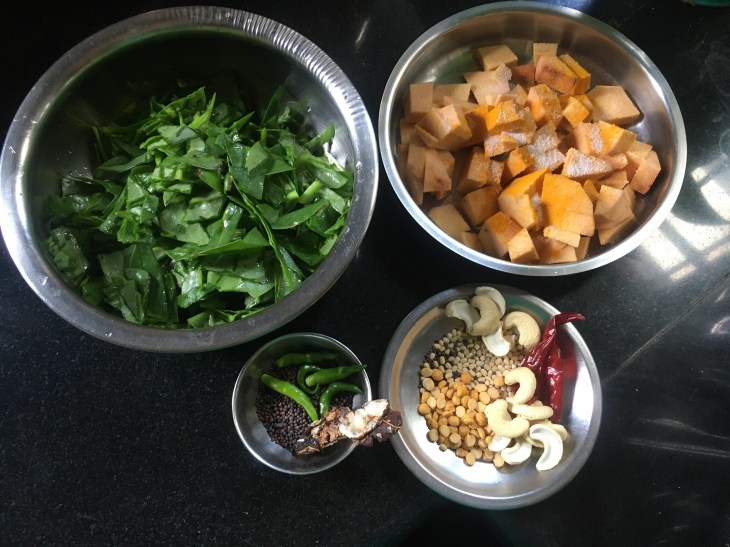
Ingredients
- Elephant foot Yam – Peeled and roughly chopped into chunks – 2 Cups
- Malabar spinach – 1 small bunch of leaves chopped roughly – 2 cups
- Salt to taste
- Turmeric – half a tsp
- For Aava ( mustard Paste)
- Mustard – 3 tsp
- Green chillies – 4 to 5 ( Per spice level)
- Tamarind – Small marble sized balll
- For seasoning/ tadka
- Oil – 3 tbsp
- Urad dal – 1 tsp
- Chana daal / bengal gram – 1 tsp
- Dried red chillies – 2
- Cashews/Kaju – 6 to 7 ( Per taste)
Process
- Using a knife, cut and remove the skin of the Yam and wash it thoroughly
- Roughly chop the yam into chunks and add salt and turmeric.
- Wash and clean Malabar spinach leaves thoroughly and roughly chop these and add to Yam pieces.
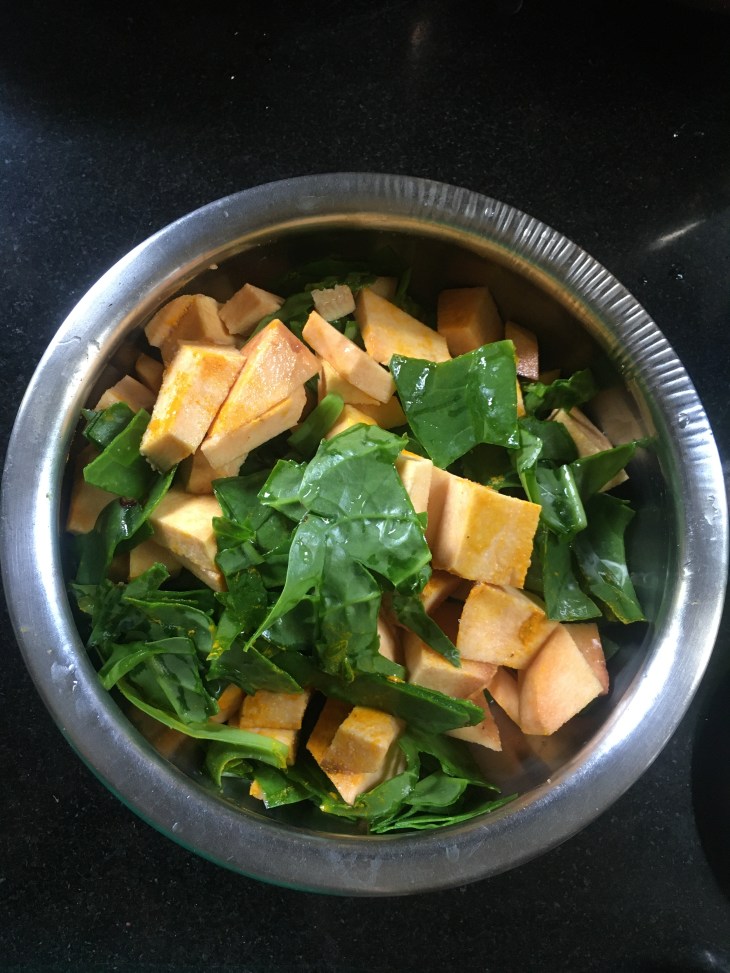
4. Add some water and pressure cook the Yam and spinach pieces for 2-3 whistles. Sometime based on the quality , you may require to cook the Yam further for couple of more whistles if is isn’t cooked well.
5. Meanwhile blend mustard seeds, green chillies and tamarind adding little water to get a fine paste. You can grind the mustard first and then add chilly, tamarind and water and blend into a paste.
6. Once the Yam pieces are cooked, mash it well.


7. Now heat oil in a pan and once hot, add urad daal, chana daal, Kaju and dried red chillies. Once they turn golden colour add the mustard paste and fry for a minute.
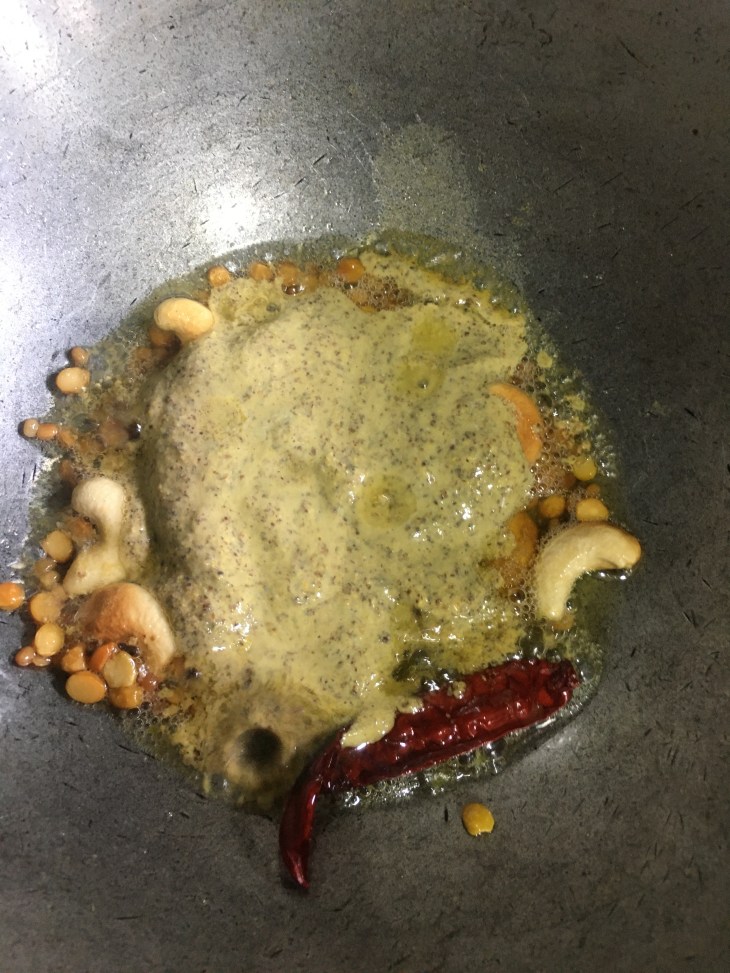
8. Now add the mashed Yam and spinach mix into the tadka.
9. Mix everything together. Fry for a minute or two.
10. Don’t over cook as mustard paste may render a bitter flavour. Once done, transfer the curry to a serving bowl.
11. You can serve this curry with hot rice and ghee.
For that extra crunch : If you have moong daal vadi ( Dried crispies made from moong daal) then you may add few of them to the tadka and fry before adding the mustard paste and Yam Spinach mix. This will give crunch to the curry.
Alternatives : While the original recipe calls in for Malabar spinach, you can always use regular spinach ( Paalak) without lowering the taste quotient much.
Please do try this out and share your feedback. Though am an experienced cook, I am a new blogger who is translating all the actions into words. So its important to learn from your reviews if I am able to translate the recipes from my Brain to blogs well.

 Oota ayita